Sleep Meditation for Anxiety: 15–30 Minute Night Routine
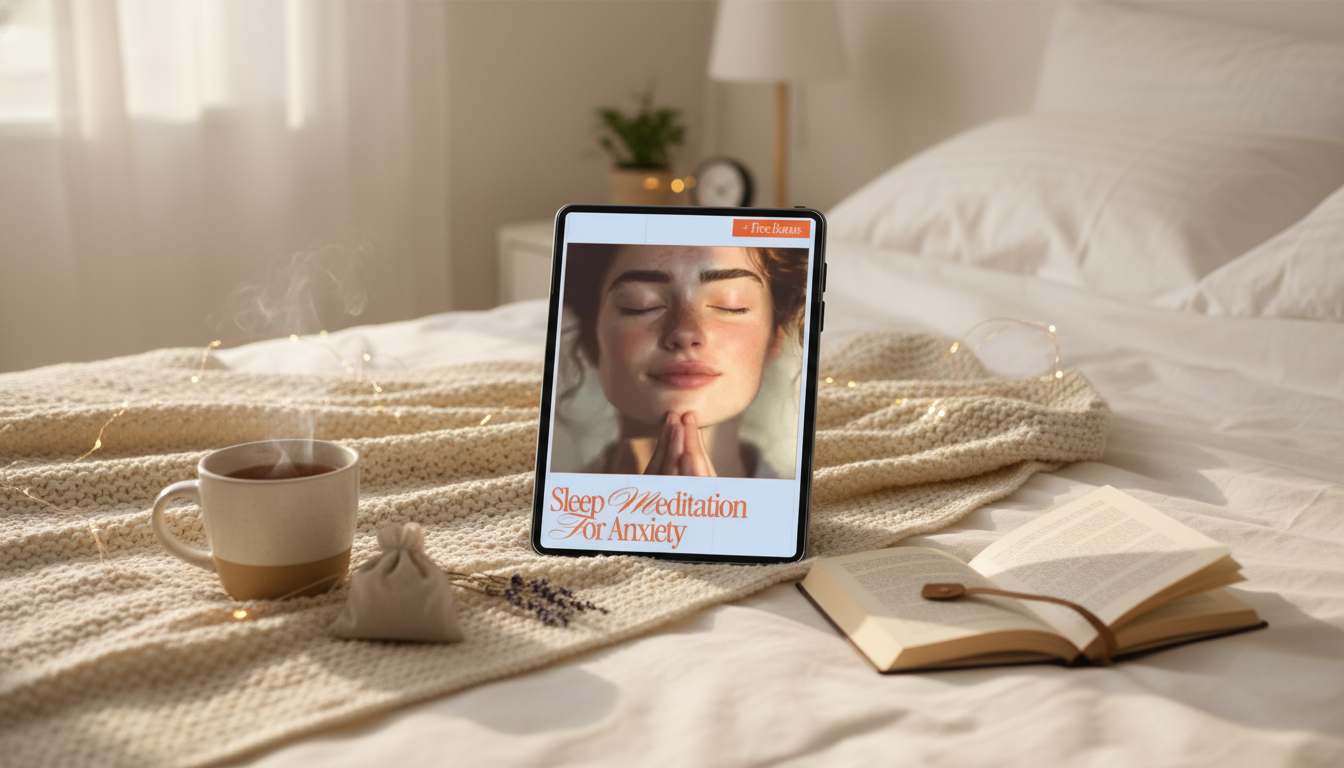
Sleep Meditation for Anxiety: A Guided Night Routine to Calm the Mind and Drift Off Naturally
Racing thoughts at bedtime can turn a tired body into an alert mind. Guided sleep meditation offers a gentle, structured way to shift from worry to rest by relaxing the nervous system, slowing breathing, and giving attention a calming anchor. With a consistent routine, many people find it easier to reduce stress, quiet the mind, and improve sleep without forcing it.
Why Anxiety Feels Worse at Night
Nighttime anxiety often isn’t “more anxiety”—it’s anxiety with fewer buffers. When the day’s noise fades, your mind has more space to scan, plan, and replay.
- Less distraction makes worries feel louder. In the quiet, the brain tries to problem-solve and predict outcomes, even when it’s time to rest.
- A sensitized nervous system stays vigilant. Stress hormones and hyperarousal can keep the body in a light “on guard” state that resists sleepiness.
- Fear of not sleeping becomes its own trigger. Anticipatory anxiety (“What if it happens again?”) can create a loop that reinforces insomnia.
- Routines teach the brain what comes next. Repeating the same wind-down cues (dim light, calm audio, slow breathing) can train your system to shift gears more easily.
How Guided Sleep Meditation Helps Calm the Nervous System
Guided sleep meditation works less like “thinking yourself calm” and more like giving your attention and body a simple set of instructions. Over time, this can reduce arousal and make bedtime feel safer and more predictable.
- Narration provides a steady focal point. A calm voice gives your mind something neutral to follow, making worry loops less sticky.
- Breath cues support the rest-and-digest response. Longer, slower exhales can signal the parasympathetic nervous system to downshift. Harvard Health notes that breath control can help quiet the stress response (Harvard Health Publishing).
- Body scans reduce tension you may not notice. Progressive relaxation can soften tight shoulders, jaw clenching, and restless legs that keep you from drifting off.
- Soothing imagery reduces perceived threat. Visualization and reassuring language can help the brain move out of “danger mode” and into “safe enough to sleep.”
- Mindfulness builds tolerance for thoughts. Noticing thoughts without chasing them strengthens the skill of letting mental noise pass. The American Psychological Association summarizes mindfulness meditation as a research-backed approach to reduce stress (APA).
A Simple 15–30 Minute Night Routine (Repeatable and Low Effort)
The best routine is the one you can repeat on imperfect nights. Keep it simple, keep it consistent, and treat “calm” as the goal—sleep usually follows.
Night routine options by how your anxiety shows up
| Bedtime challenge | Best meditation style | Supportive add-on |
|---|---|---|
| Racing thoughts and planning | Guided mindfulness with breath anchors | “Brain dump” journaling for 3–5 minutes |
| Body tension or restlessness | Progressive muscle relaxation or body scan | Warm shower or light stretching |
| Panic sensations (tight chest, fast heart) | Slow-breath pacing with grounding cues | Cool room, hand on belly for diaphragmatic breathing |
| Waking at 2–4 a.m. and spiraling | Short calming re-set meditation (10–15 min) | Avoid clock-checking; keep lighting very dim |
Getting the Most from a Digital Guided Meditation Download
When Meditation Doesn’t “Work” Right Away
- Early practice can feel activating. Observing thoughts isn’t failure; it’s the training effect of mindfulness.
- Aim for a calmer baseline first. Sleep often arrives after arousal drops, not because you “try harder.”
- If frustration spikes, simplify the anchor. Count exhales from 1 to 10, then restart at 1—no judgment, just repetition.
- Shorten the session temporarily. Try 8–12 minutes for a week, then gradually extend to 15–30 minutes.
- Consider extra support for persistent insomnia. Cognitive behavioral therapy for insomnia (CBT-I) is commonly recommended and can be used alongside relaxation skills (Mayo Clinic).
What to Expect Over 7 Nights of Consistent Practice
Try This Guided Sleep Meditation for Anxiety (Digital Download)
If you want a ready-to-use track designed specifically for anxious bedtime thoughts, Sleep Meditation for Anxiety – Guided Sleep Meditation for Anxiety Relief (Digital Download) is built to support a repeatable nighttime routine. Because it’s digital, it’s easy to replay nightly, keep available offline, and pair with a sleep timer for a quieter experience.
For daytime confidence-building that can reduce overall stress levels (including the stress you bring to bedtime), consider Quiet Confidence — A Growth-Focused Introvert’s Guide to Social Ease.
FAQ
How long should a guided sleep meditation be for anxiety relief?
Most people do well with 10–30 minutes: choose 10–12 minutes if you get easily activated, and 20–30 minutes if you need more time to wind down. A sleep timer helps you keep it soothing without audio playing too long.
What if I fall asleep before the meditation ends?
That’s completely fine—falling asleep is the goal, and your brain still benefits from the repeated bedtime cue. Keep the volume low and use a timer so the audio doesn’t disturb you later.
Can guided sleep meditation help with middle-of-the-night anxiety?
Yes—use a shorter “reset” practice (about 10–15 minutes), keep lights very dim, and avoid checking the clock. Return to simple grounding like slow exhale pacing or feeling the weight of your body on the mattress.















Leave a comment