Stop Comparing Yourself: Roots, Resets, Real Confidence
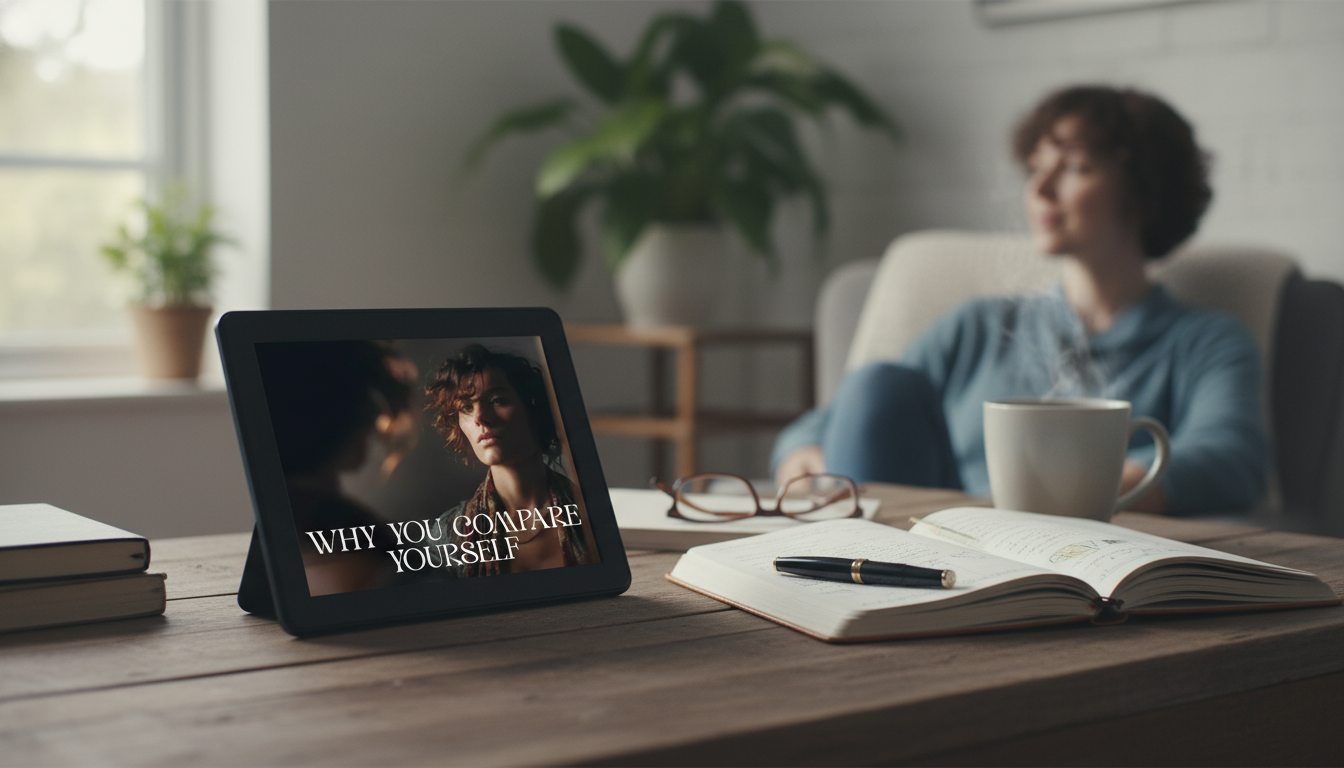
Understanding Why You Compare Yourself and How to Stop
Comparison can feel automatic—one scroll, one conversation, one milestone announcement—and confidence drops. The good news: comparison follows patterns that can be understood, interrupted, and replaced with steadier self-trust. The goal isn’t to “never compare” again; it’s to recognize what comparison is trying to do for you, respond to the real need underneath, and build a kind of confidence that doesn’t require being ahead.
What comparison is really trying to do
At its core, comparison often works like a rapid “safety check”: Am I okay? Do I belong? Am I falling behind? Your brain is designed to use social cues to predict outcomes—especially in uncertain seasons—so comparison can function like a shortcut for reducing ambiguity.
Not all comparison is harmful. Skill-based comparison can be simple information gathering: “They’re good at this—what can I learn?” The pain tends to start when comparison becomes a verdict on your value, turning into self-judgment instead of insight.
Common signs comparison is no longer helpful include rumination, an urgent need to prove worth, avoidance (you stop trying because you feel behind), perfectionism, or a wave of shame after social media exposure.
The most common roots: needs, fears, and old rules
Comparison is rarely “random.” It’s often a signal that a need is asking for attention. Belonging, recognition, security, autonomy, rest, and play can all show up as comparing—especially when life feels demanding or lonely.
Underneath the habit, core fears tend to repeat: being left behind, not being enough, being unlovable, being “found out,” or missing a narrow window for success. These fears make the mind scan for proof that you’re safe—and unfortunately, the scan is biased toward threat.
For a structured way to spot your personal triggers and the beliefs underneath, consider a workbook-style guide like Understanding Why You Compare Yourself and How to Stop – Self Growth eBook.
Two styles of comparison that require different fixes
Comparison patterns and quick mindset resets
| Pattern | What it’s protecting | Reset question | Small action in 2 minutes |
|---|---|---|---|
| Upward comparison spiral | Fear of falling behind | What do I actually want to build—independent of them? | Write 1 next step you can do today |
| Scrolling for reassurance | Need for certainty or soothing | What feeling am I avoiding right now? | Name the feeling; take 6 slow breaths |
| Perfectionistic measuring | Fear of rejection | What is “good enough” for this season? | Set a minimum standard and stop |
| Status checking | Need for belonging | Where do I already belong without performing? | Text one safe person; be honest |
| Self-criticism after exposure | Old rule: worth must be earned | Would I talk to a friend this way? | Rewrite the thought in kinder language |
Emotional awareness: the skill that stops the loop
Then swap “What’s wrong with me?” for “What am I needing?” That shift moves you from judgment to care—where real behavior change is more likely to stick. For more background on why humans do this in the first place, social comparison theory offers a helpful lens (see Britannica’s overview).
A simple 4-step interruption routine (use it on the spot)
Confidence that doesn’t depend on being “better”
Make your environment less comparison-friendly
Inputs matter. Curate feeds: unfollow accounts that trigger shame, and follow creators who normalize process, rest, and nuance. Add friction during vulnerable hours by removing apps from your home screen, disabling push notifications, and using time limits when you know you’re tired or stressed. The American Psychological Association also notes the importance of understanding how social media affects mental health and well-being (APA guidance).
Support your nervous system with “quiet cues” at home: an evening reset, a tidy workspace, and a visible reminder of your real priorities can reduce compulsive checking. If visual overwhelm fuels emotional overwhelm, decluttering routines can lower background stress—making comparison less likely to grab the steering wheel. A practical tool to start with is Storage Hacks to Reduce Visual Clutter | Printable Checklist for Home Organization.
If your confidence dips most when you sit down to work, consider setting up a dedicated, grounding workspace that supports focus over frenzy. A stable, organized station—like the 62″ Executive Desk with Double Pedestal and Natural Wood Top—can make it easier to return to your own goals instead of defaulting to comparison loops.
A guided reset when comparison is a daily habit
A strong guide includes prompts for emotional awareness, thought reframing, boundaries with social media, and daily micro-practices that build self-trust without forcing positivity. For a step-by-step plan, explore Understanding Why You Compare Yourself and How to Stop – Self Growth eBook | Mindset Reset Guide for Confidence & Emotional Awareness.
FAQ
Why do I compare myself even when things are going well?
Comparison is often a safety habit that tries to reduce uncertainty, and success can raise the stakes (visibility, expectations, fear of losing progress). Name the emotion, spot the trigger, and take one values-based action that supports your life right now.
How do I stop comparing myself on social media without quitting completely?
Curate your feed, mute triggering topics, remove apps from your home screen, and set specific time windows for intentional use (post, check messages, then leave). Avoid scrolling when you’re tired, lonely, or overwhelmed, since those states amplify comparison.
Is comparison ever helpful for self-improvement?
Yes—when it’s skill-focused, specific, and produces a clear next step while preserving self-respect. If it turns global (“I’m less than”), triggers rumination, or leads to shame, it’s no longer improvement data and it’s time to redirect.














Leave a comment