Systems for Long-Term Growth: Habits, Focus, Weekly Review
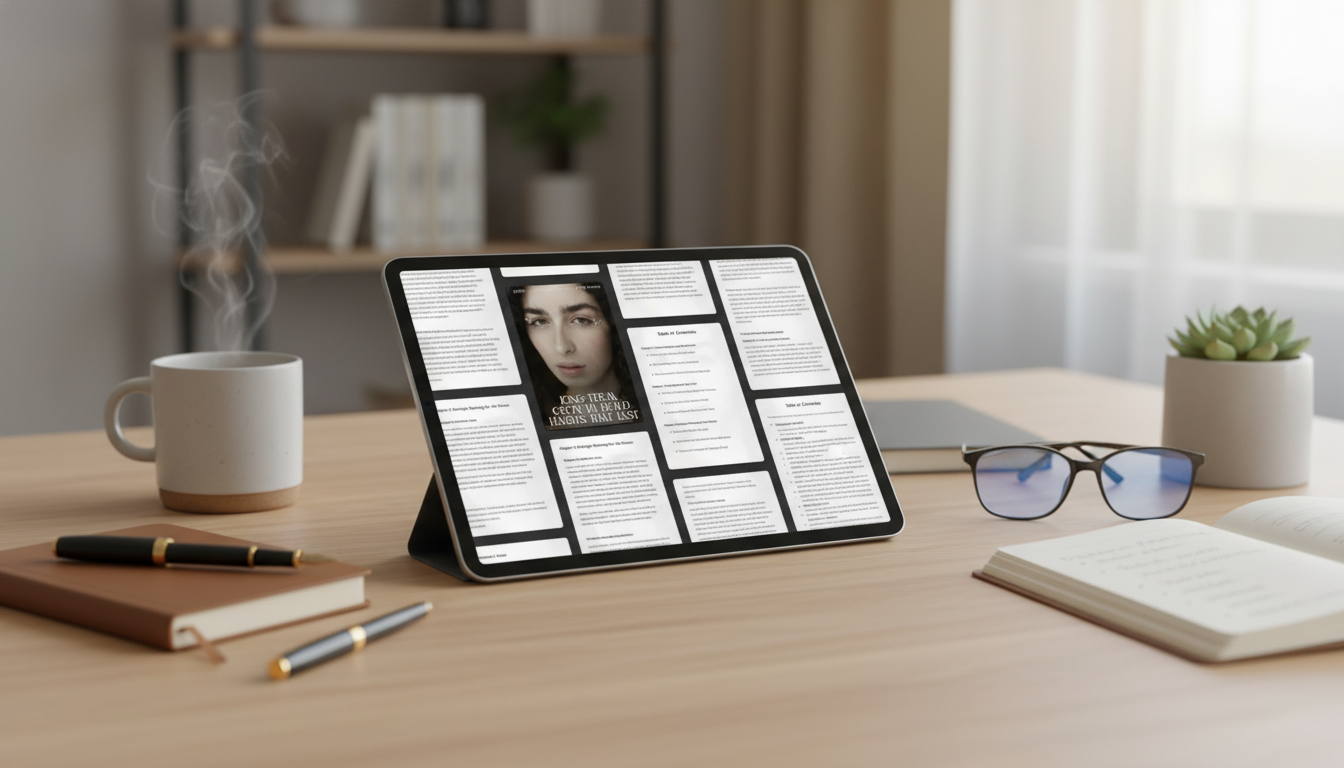
Long-Term Growth Through Systems: Build Habits That Last and Stay Focused
Long-term growth comes from repeatable systems, not occasional bursts of motivation. The most sustainable progress happens when a small set of behaviors is clearly defined, made easy to start, and reviewed often enough to stay aligned—without turning life into a constant self-improvement project. The goal isn’t perfection; it’s building a rhythm that survives busy weeks and still moves you forward.
Start With a Clear Definition of Growth (So Effort Isn’t Random)
“Growth” can mean a dozen things, which is exactly why it needs a short, specific definition for the next season. Pick one or two focus areas for the next 90 days—health, a skill, career momentum, relationships, finances, or creative output. Keeping it small prevents the common trap of trying to improve everything at once and sticking with none of it.
For each focus area, translate the goal into two parts: an outcome and a behavior. Outcomes inspire (finish a certificate, lower stress, ship a portfolio). Behaviors drive results (30 minutes of practice, three workouts a week, 45 minutes of deep work daily). If you only set outcomes, you’ll tend to “try harder” instead of doing the repeatable actions that actually create change.
Next, set a “minimum viable win” for chaotic days. This is the smallest version that keeps the habit alive: one page read, five minutes of stretching, one paragraph drafted. Minimums protect continuity, and continuity protects identity—once something is “what you do,” restarting gets easier.
Finally, choose one metric that measures consistency rather than perfection. “Sessions per week” and “minutes per day” are steadier than peak performance metrics. Consistency metrics make it obvious what to do next and reduce the emotional roller coaster of good days vs. bad days.
Build Habits That Last: Make the System Easy to Start and Hard to Skip
A habit is a learned pattern—something repeated so often it becomes more automatic over time. The American Psychological Association defines habit as a “well-learned behavior or automatic sequence” that can be triggered by cues in the environment (APA Dictionary of Psychology: Habit). That’s good news: habits don’t rely on constant motivation; they rely on reliable cues and low friction.
Start with a tiny first step—two minutes, one page, one email draft. Small starters reduce resistance and create momentum. Pair that starter with an “anchor” that already exists in your day: after coffee, after lunch, before shutting down work. This matches what behavior researchers emphasize: when a behavior is easy and prompted at the right time, it’s far more likely to happen (see the Stanford Behavior Design Lab (BJ Fogg)).
Environment design matters more than pep talks. Keep tools visible, remove common distractions, and pre-stage what “starting” requires. If the document is already open, the shoes are by the door, or the calendar block is already set, you’ve lowered the “activation energy” needed to begin.
And because lapses are inevitable, plan a recovery rule in advance. “Never miss twice” is a simple one: if you skip today, tomorrow you do the smallest version. Recovery rules prevent the spiral where one miss becomes a week off.
Habit Design Checklist (System > Willpower)
| Habit | Trigger (When/Where) | 2-Minute Starter | Environment Tweak | Recovery Rule |
|---|---|---|---|---|
| Daily deep work block | After opening laptop at 9:00 | Open the one document that matters | Phone in another room; site blocker on | If missed, do 10 minutes before lunch |
| Skill practice | After dinner | Practice for 5 minutes | Instrument/app ready on desk | If missed, practice 2 minutes before bed |
| Weekly planning | Friday afternoon | Write top 3 priorities | Calendar + task list open together | If missed, do Sunday night for 10 minutes |
Stay Focused on the Long Term Without Losing the Week
A Simple Digital Productivity Rhythm That Supports Consistency
Use templates for repeated work: meeting notes, project checklists, weekly review prompts. Templates reduce decision fatigue and prevent “reinventing” the process every time. If you like the feeling of structure without complexity, a guided digital workbook can help keep all steps in one place—like Long-Term Growth: Build Habits That Last (Digital Productivity & Success Guide).
Create a Weekly Review That Turns Effort Into Progress
Common Traps That Break Long-Term Growth (and What to Do Instead)
Motivation chasing: Motivation comes and goes. Cues, environment, and identity-based habits last. If you want a quick framework for triggers and routines, the cue-based “habit loop” model is a helpful lens (James Clear: The Habit Loop).
Put It Into Action With a Guided Workbook
If your main obstacle is distraction or cluttered workspaces, simplifying the physical environment can support the mental system. Consider pairing your planning routine with a decluttering reset using Storage Hacks to Reduce Visual Clutter (Printable Checklist). And if you’re building a steadier deep-work practice, a dedicated workspace can make the “start cue” more automatic—like the 62″ Executive Desk with Double Pedestal and Natural Wood Top.
FAQ
How long does it take to build habits that last?
It varies based on the habit’s complexity and your context, so a fixed number of days isn’t the most useful target. Focus on stable triggers, tiny starters, and environment design so the behavior happens consistently even when motivation drops.
What should be tracked for long-term growth without becoming obsessive?
Track inputs that drive action—minutes practiced, sessions completed, or a simple checkmark—plus a short weekly review note about what helped or hurt consistency. Keep metrics few and tied to behavior, not perfection.
How can long-term focus be maintained during stressful or busy weeks?
Use a minimum viable version of the habit, protect one core block of time, and apply a recovery rule like “never miss twice.” Temporarily drop nonessential tasks so the core system survives the season instead of collapsing.
















Leave a comment