Imaginative Kids Storybook PDF with Gentle Lessons
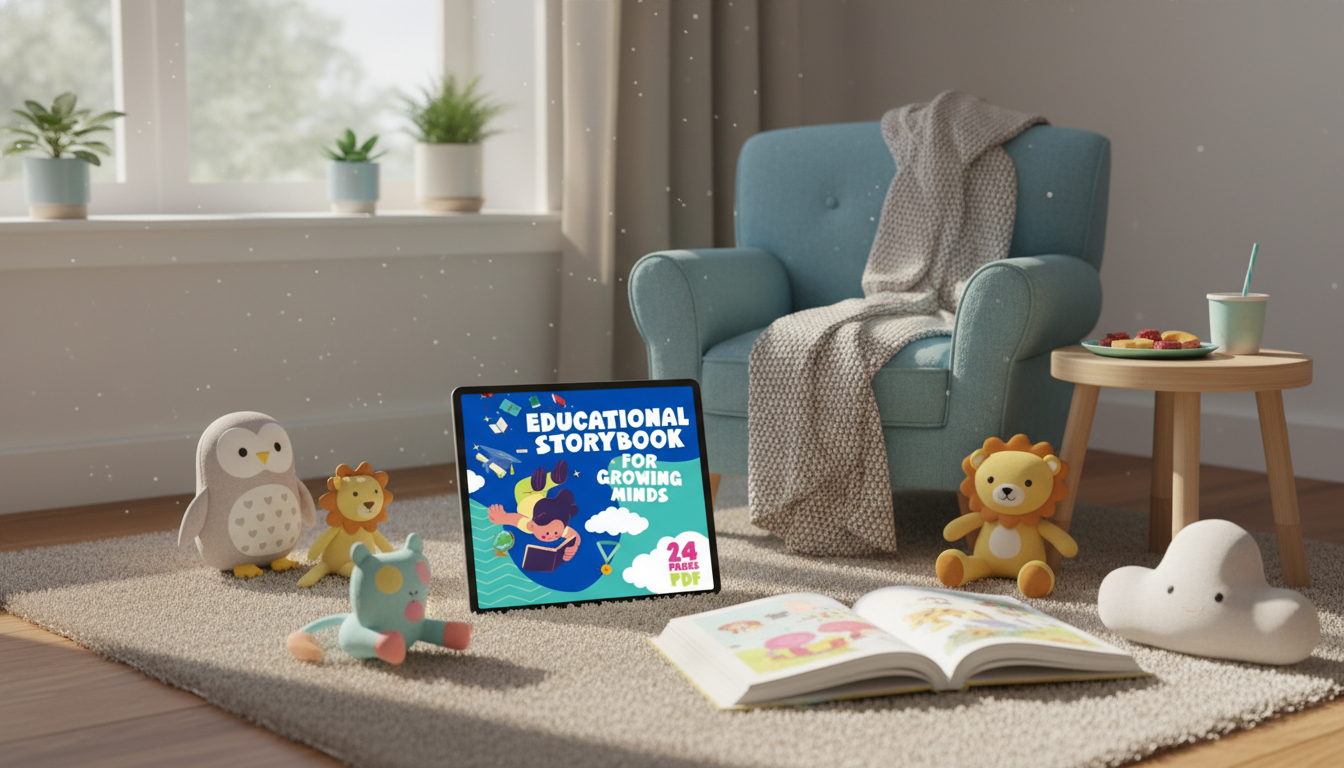
Educational Storybook for Growing Minds: Imaginative Kids Stories with Gentle Lessons (Digital PDF eBook)
A well-chosen story collection can do double duty: keep kids engaged while quietly building language, empathy, and everyday problem-solving. This digital storybook collection is designed for easy reading at home, on the go, or as part of a simple learning routine—without needing extra materials beyond a screen (or a printer if preferred). For more guidance, see [PDF] 62nd Yearbook of the Literacy Research Association.
What this story collection offers
This is a digital PDF storybook built around imagination and gentle, kid-friendly lessons. The goal is to make story time feel enjoyable while still giving caregivers simple ways to talk about choices, feelings, and “what happens next” thinking. For further reading, see [PDF] Assessing Students’ Needs for Assistive Technology.
- A set of imaginative stories designed to hold attention while reinforcing positive takeaways.
- Lesson-forward storytelling that supports reflection and simple conversation after reading.
- Digital PDF format suited for tablets, laptops, and print-at-home use.
- A flexible resource for bedtime reading, quiet time, homeschooling, and travel.
Why lesson-based stories work for kids
Stories let kids explore real-life situations at a safe distance. When a character makes a mistake, tries again, or learns how to handle big feelings, children can absorb the idea without feeling singled out or corrected.
- Stories provide a low-pressure way to explore feelings, choices, and consequences through characters.
- Repeated themes help children practice social-emotional skills like patience, kindness, honesty, and resilience.
- Narratives strengthen listening comprehension and vocabulary by presenting new words in context.
- Short discussions after a story can support recall, sequencing, and reasoning without turning reading into a quiz.
Many child development experts also emphasize that regular reading routines support language development and connection. For additional guidance, see the American Academy of Pediatrics resource on reading and literacy, and NAEYC’s family guidance on play and learning.
How to match the reading experience to your child’s age
The same stories can “fit” different ages depending on how they’re used. A preschooler may need a warm read-aloud and a feelings check-in, while an older child may benefit most from discussing motives and consequences.
- For younger kids: focus on read-aloud flow, character feelings, and simple “What would you do?” questions.
- For early readers: take turns reading pages, pausing to predict what happens next and define new words.
- For older elementary: discuss motives, cause-and-effect, and how the lesson applies to school or friendships.
- Use one consistent routine (same time, same cozy spot) to help reading become a habit.
Simple ways to use the storybook by age
| Age range | Best format | What to emphasize | Quick follow-up question |
|---|---|---|---|
| Ages 3–5 | Read-aloud | Feelings, choices, routines | “How do you think the character felt?” |
| Ages 6–7 | Shared reading | New words, predictions | “What do you think will happen next?” |
| Ages 8–10 | Independent + discussion | Motives, problem-solving | “What would you do differently?” |
Practical ways to build learning around each story
Meaningful learning doesn’t require worksheets or long talks. A simple rhythm—one question before, a quick pause during, and a short recap after—helps kids practice comprehension and reflection while keeping the mood light.
- Before reading: look at the title and ask for a prediction to activate curiosity.
- During reading: pause at a key moment and ask what the character might do next and why.
- After reading: recap the beginning–middle–end to strengthen sequencing and comprehension.
- Extend the lesson: pick one small real-world action (helping, sharing, trying again) to practice that day.
- Keep it light: one question and one takeaway is often enough for meaningful learning.
If a story touches on a tricky topic (jealousy, frustration, honesty), it can help to normalize the feeling first (“That’s a hard feeling”) and then focus on the next best step (“What could they do instead?”). This keeps the conversation supportive rather than corrective.
Using a digital PDF at home and on the go
Digital storybooks are especially helpful for families who juggle busy schedules, shared custody, or frequent travel. A PDF format is simple: open it on common devices, or print selected pages when you want a screen-free moment.
Who this storybook fits best
Product details and what to expect from the download
Related picks to support a simple reading routine
- Educational Storybook for Growing Minds (Digital PDF Download) — a ready-to-use set of imaginative stories with gentle lessons.
- Storage Hacks to Reduce Visual Clutter (Printable Checklist) — helpful for tidying shelves, organizing kids’ papers, and making a quieter space for reading.
- 62″ Executive Desk with Double Pedestal and Natural Wood Top — a sturdy option for families creating a dedicated homework-and-reading station.
FAQ
What age is this story collection best for?
It’s a flexible fit for many elementary-age families, and it can also work for younger children as a read-aloud. For preschoolers, focus on listening and feelings; for early readers, share pages and define new words; for older kids, add brief discussion about motives and real-life choices.
Can the PDF be printed, or is it only for screens?
The download is a PDF, so it works well on tablets and computers and can also be printed at home. For best results when printing, consider selecting specific pages and checking scale or “fit to page” settings in your printer dialog.
How can parents turn the stories into learning without making it feel like homework?
Keep it quick and positive: ask one short question during reading, share one takeaway after, and choose one tiny real-life action to practice that day. Consistency matters more than length, so a few minutes of calm conversation is plenty.















Leave a comment