10-Minute Emotional Strength Routine for Kids Ages 3–5
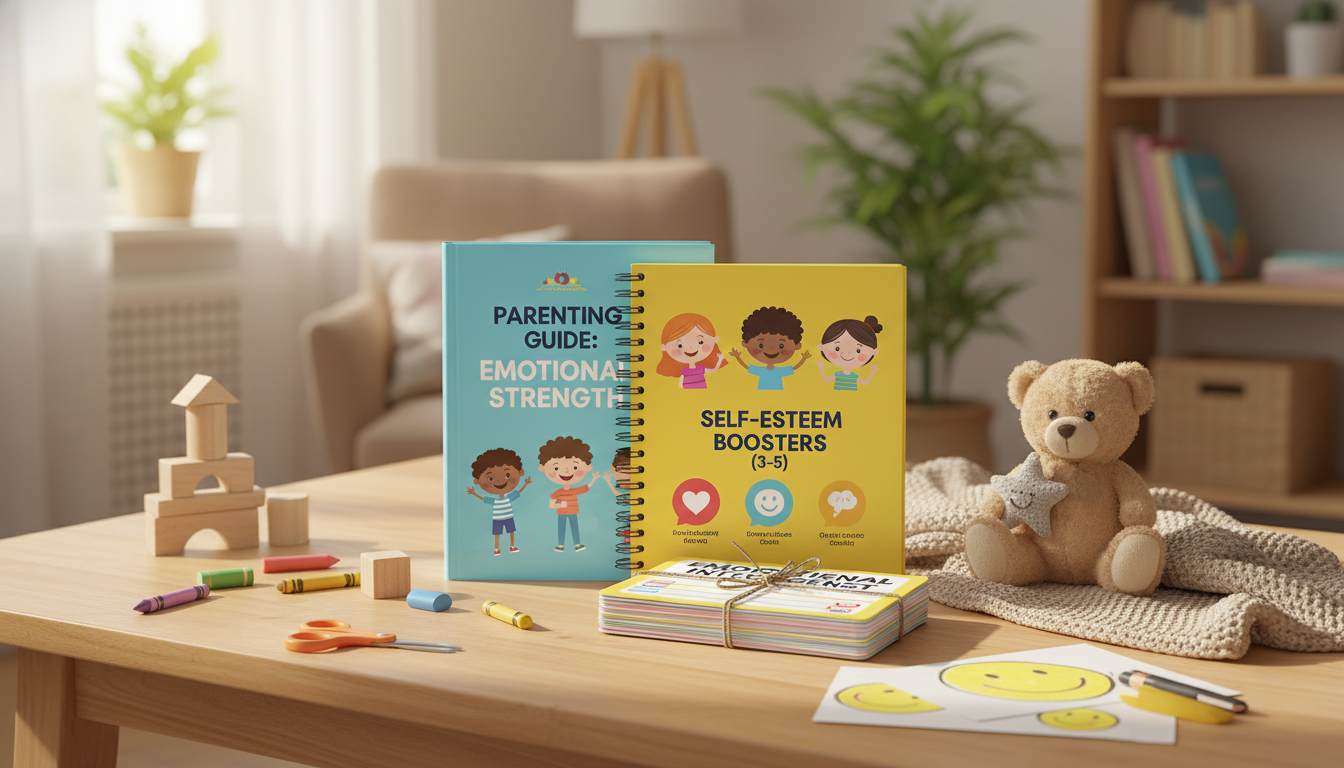
Confident Kids Bundle: A Simple 3-in-1 Toolkit for Emotional Strength Ages 3–5
Strong feelings are part of early childhood—what helps most is a steady routine for naming emotions, practicing coping skills, and building a child’s sense of “I can handle this.” The Confident Kids Bundle: Nurturing Emotional Strength (3-in-1 Bundle) combines a parenting guide, self-esteem activities for ages 3–5, and an emotional intelligence checklist to support everyday moments like transitions, sibling conflict, and big frustrations.
Emotional skills at this age grow fastest with repetition and calm adult support—exactly the approach recommended by child-development resources like the CDC Essentials for Parenting and guidance from HealthyChildren.org (American Academy of Pediatrics).
What “emotional strength” looks like in ages 3–5
Preschool emotional strength isn’t “never melting down.” It’s the gradual shift from big reactions to better recovery, plus a growing ability to express feelings with words and safe actions.
- Names basic feelings (mad, sad, scared, happy) and starts noticing what triggered them
- Accepts comfort and begins trying simple calming steps with adult support
- Recovers more quickly after a disappointment and returns to play
- Practices early empathy: noticing when someone is hurt or upset
- Uses words more often than hitting/throwing (even if not consistently yet)
What’s inside the Confident Kids Bundle (3 pieces that work together)
Instead of a one-off activity, this bundle is built like a small system: teach the skill, practice it through play, and track what’s changing so you know what to repeat next.
- Parenting guide: practical scripts and routines for coaching emotions without shaming
- Self-esteem activities (ages 3–5): play-based prompts that build confidence through small successes
- Emotional intelligence checklist: a simple way to notice progress and choose what to practice next
- Designed to be used in short bursts (5–15 minutes) and repeated, which is how preschoolers learn best
- Useful for home, preschool readiness, and caregiver consistency (parents, grandparents, babysitters)
If your home environment feels overstimulating during tough moments, pairing the routine with a simple decluttering plan can help reduce visual noise. The Storage Hacks to Reduce Visual Clutter (Printable Checklist) is an easy add-on for creating calmer spaces like a “quiet corner” or a streamlined toy area.
A 10-minute daily routine using the bundle
Consistency beats intensity. A short daily loop—kept nearly the same each time—helps kids recognize what comes next and borrow your calm until they can do it more independently.
- Step 1 (2 minutes): “Name it to tame it” — label the feeling and validate it (“You’re mad your tower fell.”)
- Step 2 (3 minutes): Pick one coping tool — belly breaths, squeeze-and-release, count and tap, or a quiet corner
- Step 3 (3 minutes): Do one self-esteem activity prompt — effort praise, brave try, helper job, or choice-making
- Step 4 (2 minutes): Quick reflection using the checklist — (“What did you try when you felt mad?”)
Keep language consistent across caregivers so your child hears the same calming script. Predictable wording becomes a “verbal handrail” during transitions and meltdowns.
Self-esteem builders that actually work for preschoolers
Preschool confidence grows from “I can do hard things (with practice)”—not from constant applause. The most effective self-esteem supports are specific, repeatable, and connected to real effort.
Emotional intelligence milestones: a simple checklist view
Tracking progress helps you stay encouraged and choose the next small skill to practice—without expecting perfection. Many social-emotional learning frameworks emphasize building skills over time through modeling and repetition (see CASEL’s overview of SEL).
Quick emotional skill map (ages 3–5)
| Skill to practice | What it can look like | Try this at home | Signs it’s improving |
|---|---|---|---|
| Naming feelings | Uses simple emotion words or points to a face chart | Ask: “Is it mad, sad, or scared?” and offer two choices | Labels feelings sooner; fewer guessing games |
| Calming body | Breathes, squeezes a pillow, asks for a break | Create a “calm spot” with 2–3 tools (not a punishment) | Returns to play faster after upset |
| Problem-solving | Tries a new approach or asks for help | Use: “What could we try next?” with two options | More attempts before quitting |
| Empathy | Notices another child’s tears; offers a toy | Model: “She’s sad. Let’s check on her.” | More kind gestures without prompting |
| Impulse pause | Stops briefly when reminded | Practice “freeze game” and “red light/green light” | Needs fewer reminders in the same situation |
Handling tough moments: short scripts for big feelings
Making the bundle fit different parenting styles and schedules
When extra support may help
Product details and who it’s best for
The Confident Kids Bundle: Nurturing Emotional Strength (3-in-1 Bundle) is best for families who want a repeatable, low-prep routine to build confidence and coping skills. It works well for ages 3–5 and can be adapted for slightly younger/older children by simplifying or expanding language. The three components are designed to reinforce each other: guidance (what to say), practice (what to do), and progress tracking (what to focus on next).
FAQ
How often should the activities be used for a preschooler?
Short, consistent practice works best: 5–15 minutes most days, plus quick “in the moment” coaching when feelings pop up. Focus on one skill for 1–2 weeks before rotating to a new one.
What if a child refuses the calming tools in the moment?
Start with safety and co-regulation: stay close, keep words brief, and offer two simple options. Practice the tools during calm times so they feel familiar, then revisit the moment later once your child is regulated.
Is this bundle appropriate for ages 3–5 if a child is very advanced or very sensitive?
Yes—adjust the language and pacing. Sensitive kids often do best with gentle feelings practice during stories and pretend play, while advanced kids can add extra problem-solving steps; use the checklist to choose the next skill to emphasize.
















Leave a comment