Calm Anxiety Fast: 60-Second Tools for Spikes
Calm Anxiety Fast: Practical Tools for the Moment It Spikes
Anxiety can arrive like a wave: racing thoughts, tight chest, restless energy, and a sudden urge to “fix it” immediately. When that happens, the goal isn’t to win an argument with your mind—it’s to help your nervous system settle enough to think clearly again. The steps below are designed to be short, repeatable, and realistic in everyday settings (work, home, errands, social situations). If anxiety is frequent, pairing quick tools with a simple routine can also reduce decision fatigue and make support easier to access when you need it most.
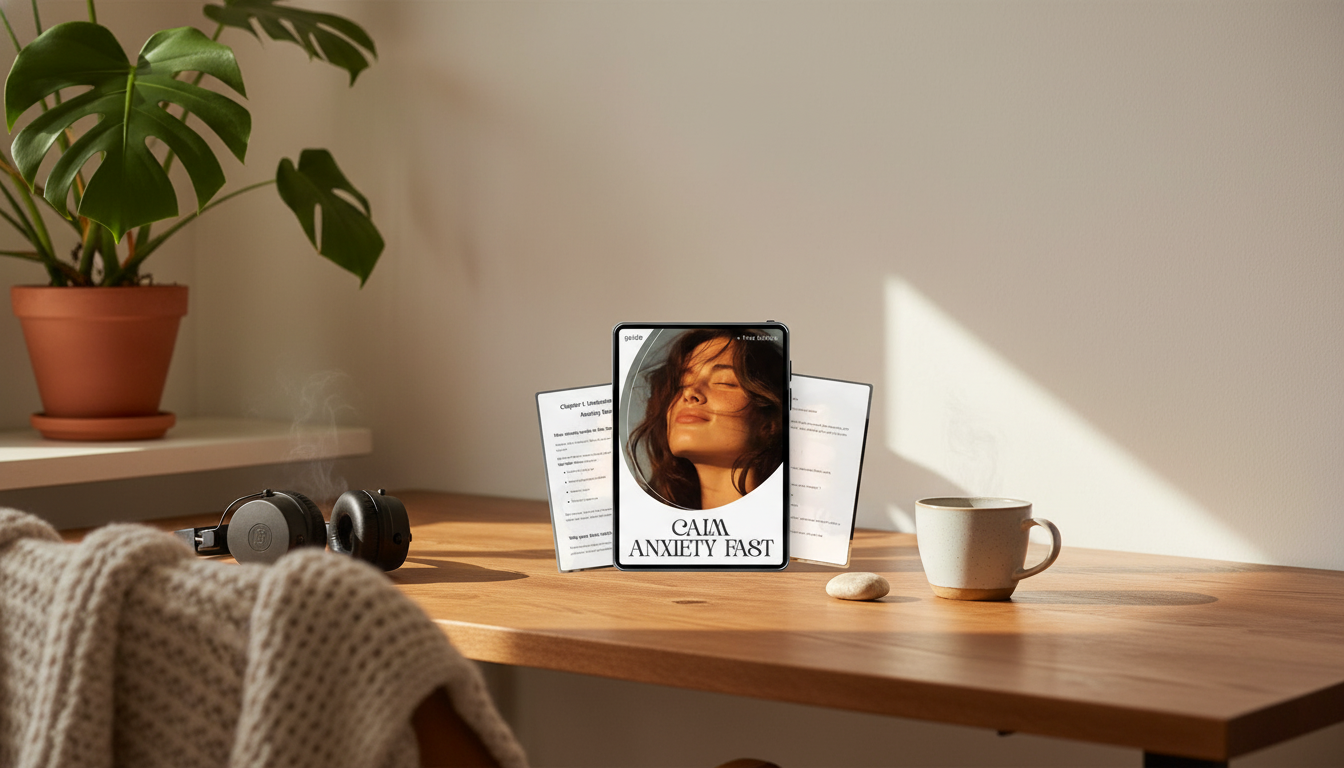
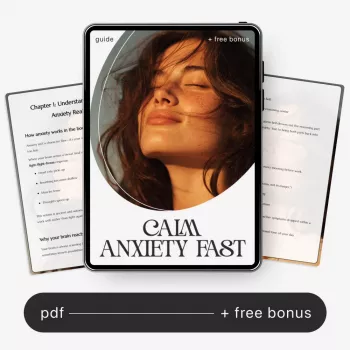
If you want a structured, save-to-your-phone approach with checklists and guided writing, Calm Anxiety Fast – Digital Guide for How to Calm Anxiety (instant download) is designed around breathing, grounding, and short planner routines you can reuse during spikes.
When anxiety hits: what to do in the first 60 seconds
- Name the moment: silently label it “anxiety is here.” This simple label can reduce the secondary panic of “something is wrong.”
- Lower stimulation: loosen jaw and shoulders, unclench hands, drop your gaze slightly, and reduce noise/light if possible.
- Orient to safety: look around and identify three neutral objects (a chair, a wall, a window). Let your brain register: “This is a normal place.”
- Choose one tool only: commit to a single technique for 60–90 seconds instead of cycling through five options.
- Medical caution: if symptoms feel like a medical emergency (new chest pain, fainting, severe shortness of breath), seek urgent medical help.
Breathing tools that calm the body quickly
Breathing won’t erase every worry, but it can change the body’s alarm setting fast enough to reduce intensity. The key is consistency: pick one method and stick with it briefly.
Fast breathing options (choose one and stick with it briefly)
| Tool | How long | Best for | Quick cue |
|---|---|---|---|
| Physiological sigh | 30–90 sec | Sudden spikes, panic sensations | Two inhales, one long exhale |
| Extended exhale | 1–3 min | Racing heart, restlessness | Exhale longer than inhale |
| Box breathing | 2–4 min | Mental spirals, concentration | Count 4–4–4–4 (or 3–3–3–3) |
- Physiological sigh: inhale through the nose, top off with a short second inhale, then a long slow exhale. Repeat 3–5 times.
- Box breathing (4–4–4–4): inhale 4, hold 4, exhale 4, hold 4. If holding increases discomfort, reduce to 3–3–3–3.
- Extended exhale breathing: inhale 4, exhale 6–8. Prioritize the longer exhale as the “calm signal.”
- Breath + muscle cue: exhale while dropping shoulders and softening the belly—pair the breath with a physical release.
- Troubleshooting: if you feel dizzy, reduce the depth of your breaths. Return to normal breathing for a few cycles, then try again more gently.
Grounding methods to stop spiraling thoughts
Grounding shifts attention away from catastrophic interpretation and toward present-moment sensory data—helpful when thoughts feel sticky or unreal.
- 5–4–3–2–1 sensory scan: list 5 things you see, 4 you feel, 3 you hear, 2 you smell, 1 you taste. Keep it factual, not poetic.
- Temperature shift: hold something cool, splash cool water, or step into fresh air to signal a reset.
- Foot-to-floor anchoring: press your feet into the ground and describe the pressure, texture, and stability in simple words.
- Object focus: choose one item and describe it in detail (color, shape, edges) for 60 seconds.
- If dissociation is present: use stronger sensory input (cool temperature, textured object), keep eyes open, and orient to the room.
A short plan for overthinking: from “what if” to “what now”
Overthinking often masquerades as problem-solving. A short structure can interrupt the loop without demanding instant certainty.
Using AI-assisted prompts as a thinking partner (without feeding the spiral)
A simple anxiety relief planner routine (morning, midday, night)
For a ready-to-use format you can reuse daily, Calm Anxiety Fast – Digital Guide for How to Calm Anxiety | Instant Download combines quick interventions with a simple planning flow so you don’t have to reinvent your next step each time.
Building a calmer environment when anxiety is frequent
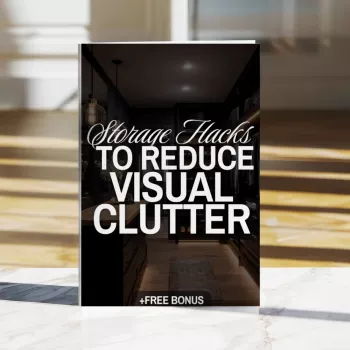
If visual clutter tends to raise your baseline stress, Storage Hacks to Reduce Visual Clutter (printable checklist) can help you streamline high-impact areas quickly. If you’re setting up a more focused “calm corner” for journaling or breathwork, a stable workspace like the 62″ Executive Desk with Double Pedestal and Natural Wood Top can make it easier to keep one surface clear and predictable.
Trusted resources for ongoing anxiety support
For deeper education and treatment options, visit the National Institute of Mental Health (NIMH) overview on anxiety disorders or the American Psychological Association (APA) anxiety resources. If you need help finding support services, the SAMHSA National Helpline can connect you to treatment and information.
FAQ
What is the fastest way to calm anxiety right now?
Orient to your surroundings by naming three neutral objects, then do 3–5 physiological sighs (two quick inhales, one long exhale) or 1–2 minutes of extended exhales. Follow with a quick grounding scan like 5–4–3–2–1, and stick with one method for 60–120 seconds; seek urgent help if symptoms are severe, new, or unusual.
Do grounding techniques help with panic and overthinking?
Yes—grounding shifts attention to present sensations and reduces catastrophic interpretation, which can interrupt rumination and panic escalation. Techniques like 5–4–3–2–1, foot-to-floor pressure, and object-focus descriptions work best when you keep them factual and repeat them for at least a minute.
Can a digital anxiety planner actually make a difference?
It can, especially when it’s brief and consistent: a daily rating, a pre-chosen coping tool, and a tiny next step reduce decision fatigue and make it easier to notice patterns over time. It’s a supportive tool—not a replacement for professional care—so consider adding therapy or medical guidance if anxiety is persistent or worsening.














Leave a comment