Feeling Lost? A 14-Day Self-Discovery Plan for Purpose
What “feeling lost” can look like (and why it’s common)
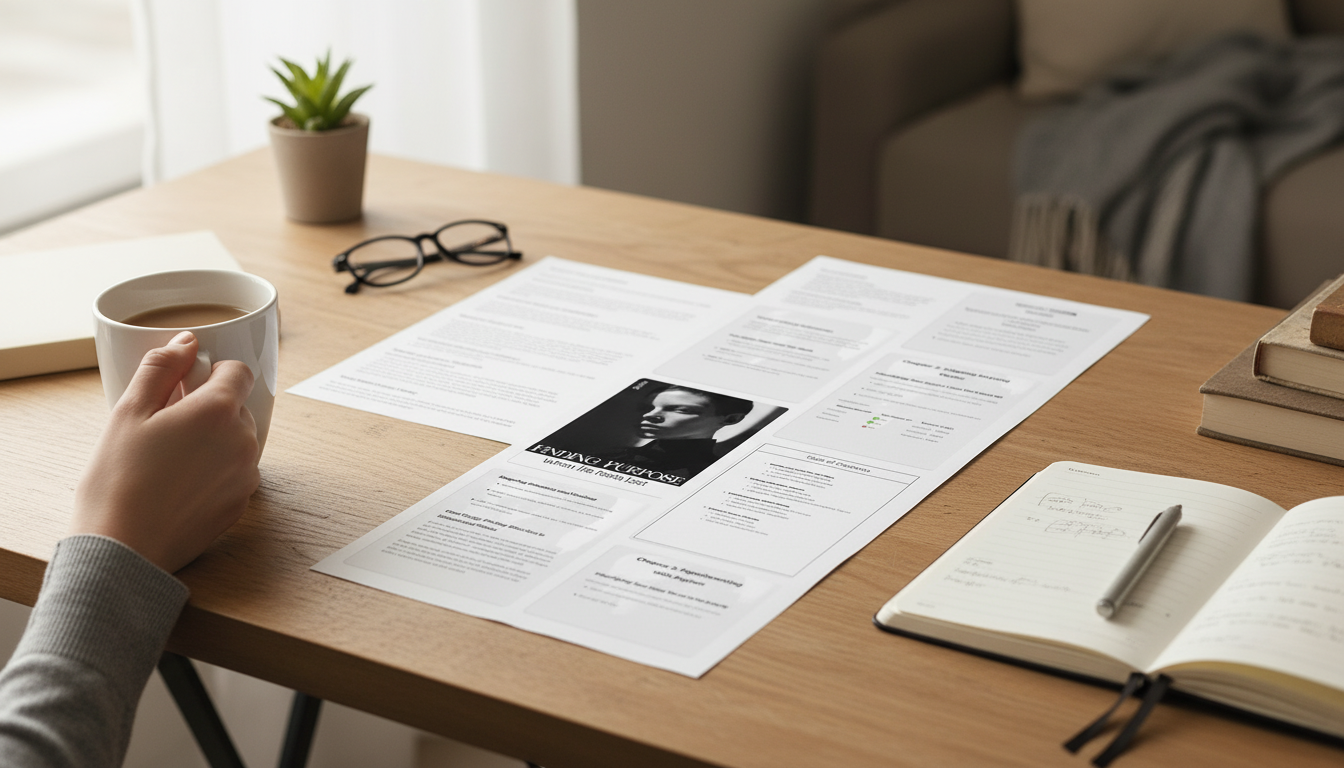
Feeling lost doesn’t always show up as dramatic confusion. More often, it’s quieter: going through routines on autopilot, delaying decisions because everything feels equally “meh,” or noticing a steady loop of “What am I doing?” thoughts. It can also look like avoiding planning because planning highlights uncertainty—or scrolling other people’s paths and wondering why yours doesn’t feel as clear.
It’s common because modern life asks for constant adaptation. Big transitions (graduation, a move, a breakup), burnout, caregiving stress, job dissatisfaction, grief, or health changes can all temporarily scramble identity and direction. When stress stays high, thinking gets narrower and more reactive—your brain focuses on getting through the day, not imagining a future. The American Psychological Association describes how stress affects the body and mind, which can make clarity harder to access over time: https://www.apa.org/topics/stress/body.
One important distinction: purpose confusion can overlap with depression or anxiety, but it isn’t the same thing. If there’s persistent hopelessness, major sleep/appetite changes, or it’s difficult to function, consider professional support and reliable information such as the National Institute of Mental Health’s depression overview: https://www.nimh.nih.gov/health/topics/depression.
A helpful reframe is to treat purpose like a compass rather than a permanent destination. The “why” can change by season—what matters now might be stability, healing, or rebuilding confidence—and that still counts as purpose.
Quick check: lost, burned out, or misaligned?
| Pattern | Often feels like | Helpful first step |
|---|---|---|
| Burnout | Exhaustion, cynicism, reduced performance | Rest + reduce load + restore basics (sleep, food, movement) |
| Misalignment | Doing “shoulds,” resentment, low meaning | Clarify values and boundaries; renegotiate commitments |
| Under-stimulation | Boredom, restlessness, procrastination | Add challenge: learning goal, project, new environment |
| Grief/major change | Disorientation, identity shift | Stabilize routines; allow time; seek support |
| Decision overload | Overthinking, stuck choices | Choose one small experiment for 2 weeks and review |
Start with stability: the minimum foundations for clarity
Before trying to “figure out your whole life,” support the system that does the figuring: your nervous system. Clarity improves with basics—sleep, hydration, regular meals, daylight exposure, and gentle movement. If you’re running on fumes, your brain will often interpret everything as urgent or pointless. Rest isn’t a reward; it’s a prerequisite for perspective.
Next, reduce short-term “noise” inputs for a small window. For 7 days, consider tightening doom-scrolling, alcohol, and multitasking. The goal isn’t perfection—it’s making space for signals you can trust (real preferences, real fatigue, real curiosity).
Try a 10-minute daily reset:
- Tidy one surface (desk, counter, nightstand).
- Write three lines about the day (what happened, what you felt, what you learned).
- Choose tomorrow’s single priority (one thing that would make the day feel “done”).
If motivation is absent, start with structure. Schedule the same tiny habits at the same times for seven days. Consistency creates traction; traction creates confidence.
Purpose comes from values + strengths + service (not perfection)
Purpose is easier to build when it’s grounded in three ingredients:
- Values: what matters even when no one is watching—freedom, craftsmanship, connection, learning, contribution, faith, integrity.
- Strengths: what tends to energize you and come more naturally with practice (skills, traits, and ways of thinking).
- Service: who benefits when those strengths are used—a friend, a customer, a community, a cause, a team, an audience.
Self-discovery prompts that unlock direction
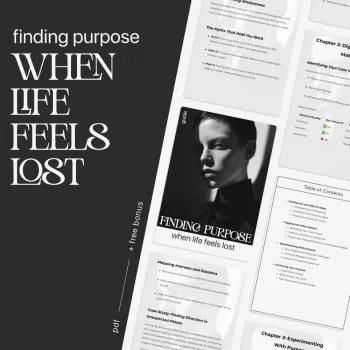
For a structured set of printable exercises that turns reflection into a clear weekly plan, consider Finding Purpose When Life Feels Lost | Self-Discovery Digital Guide.
A simple 14-day purpose experiment (small, measurable, low pressure)
Build a personal compass: goals that match the season of life
Environments matter. A dedicated workspace can reduce friction and decision fatigue. If your current setup makes it harder to focus, a functional desk can support your daily structure, such as the 62″ Executive Desk with Double Pedestal and Natural Wood Top.
A guided workbook approach for clarity and follow-through
Look for a flow that includes values clarification, strengths mapping, boundary setting, goal planning, and weekly reviews. A practical option is Finding Purpose When Life Feels Lost | Self-Discovery Digital Guide, designed to move from uncertainty to a plan you can test.
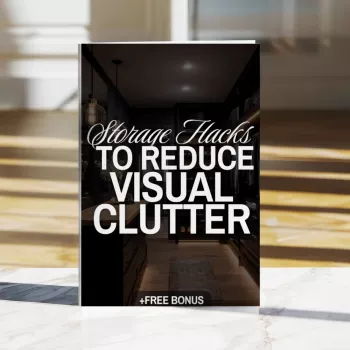
And because visual noise can quietly drain attention, simplifying your environment can support your resets and reviews. A step-by-step printable can help you start small: Storage Hacks to Reduce Visual Clutter | Printable Checklist for Home Organization.
If it still feels heavy: when to reach out for more support
If there’s persistent hopelessness, loss of interest, panic symptoms, or thoughts of self-harm, reach out for professional help. Support can be layered: a therapist or counselor, primary care provider, career coach, trusted friend, or peer support group. The World Health Organization also outlines why strengthening mental health support matters: https://www.who.int/news-room/fact-sheets/detail/mental-health-strengthening-our-response.
FAQ
How long does it take to find purpose when life feels aimless?
Purpose usually develops through small experiments over weeks to months, not a single breakthrough moment. Try a 14-day test, then commit to a 30-day iteration based on what actually boosts meaning and energy.
What if nothing feels motivating right now?
Start with stability and structure: protect sleep, food, movement, and a tiny daily routine you can keep for a week. Track energy and follow-through rather than “passion,” and seek professional support if low mood is persistent or makes daily functioning difficult.
Can a workbook really help with self-discovery?
Yes—guided prompts reduce decision fatigue by turning reflection into specific actions you can test. A consistent weekly review helps you keep what works, drop what doesn’t, and gradually refine direction with real-life evidence.














Leave a comment